You have five seconds. That's it. That's the average amount of time a driver has to see, read, and register your outdoor ad before they're gone. Not five minutes. Not fifty words. Five. Seconds.
Most brands forget this. They treat a billboard like a print ad — cramming in headlines, sub-headlines, phone numbers, websites, taglines, disclaimers, and a logo the size of a postage stamp. The result? Nobody reads it. Nobody remembers it.
At Selvel, we've been putting brands on India's skyline since 1945. We've watched what stops people and what disappears into the visual noise of a Mumbai street. What follows is everything we know about designing an outdoor ad that genuinely commands attention.
The S.E.L.V.E.L. Framework
Before getting into specifics, here is the framework that underpins every great OOH creative — whether the brief comes from a multinational or a first-time advertiser. Run your next concept through all six points. If it fails even one, go back.
Rule 1 — Silence Is a Superpower
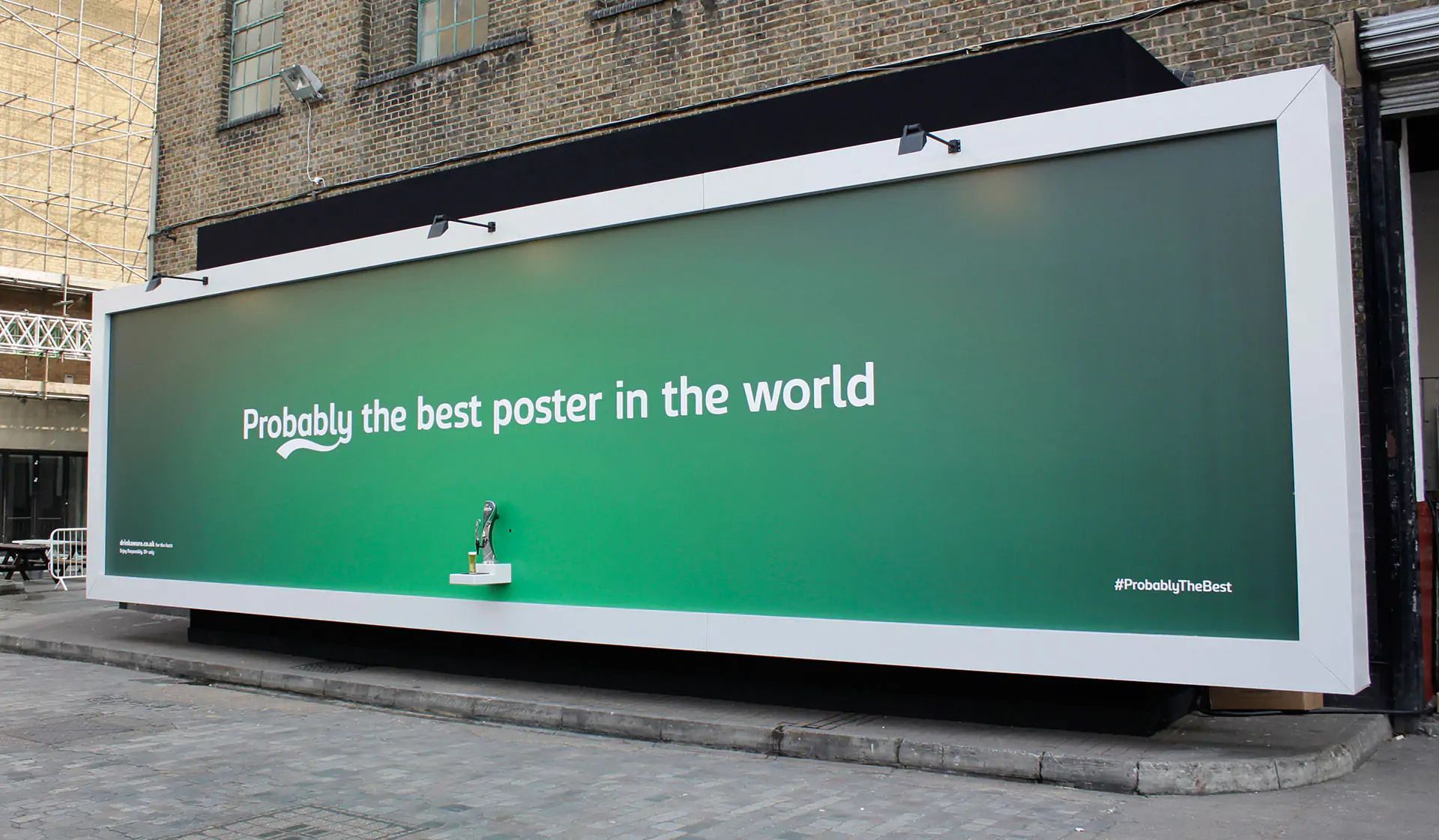
This is the single hardest rule for brands to accept — and the single most important one. The industry standard is seven words or fewer. Some of the most iconic outdoor campaigns in history use three. A few use none at all.
Think about why. Your audience is moving. They're in traffic on the Western Express Highway, on a local train past Dadar, walking past a hoarding at Churchgate. Their brain isn't in reading mode. It's in pattern-recognition mode — scanning the environment for signals. A billboard that speaks in one clear, bold statement lands instantly. A billboard that asks them to read a paragraph gets ignored entirely.
Cover your logo and read your copy aloud in under three seconds. If you stumble, run out of breath, or need to pause — you have too many words. Cut until you can't cut anymore. Then cut one more.
- Taglines that explain what the visual already shows
- Phone numbers nobody memorises from a hoarding
- Long URLs — use a short vanity URL or QR code
- Disclaimers in tiny text at 60 km/h
- Sub-headlines that repeat the headline
- One core message
- One dominant visual
- One brand mark
- One optional call to action
Rule 2 — Colour Is Your Loudest Voice
Colour is the first thing the brain registers — before shape, before text, before logo. On a billboard, your palette is doing most of the persuasion before anyone has consciously looked at your board. Research shows that high colour contrast can improve outdoor advertising recall by 38% — that is the difference between a campaign people remember and one they don't.
The outdoor environment is chaotic — blue skies, grey roads, green trees, competing signage. Your creative must cut through all of it in less than a glance. The only mechanism for that is contrast.
The Colour Combinations That Win on Hoardings
The Four Colour Rules for OOH
- Saturated beats muted. Dull, muted tones fade into the street environment. Always choose bright, highly saturated palettes. The most interesting ads are the ones where colour is an integral part of the design — not decoration.
- Limit your palette. Two colours. Three at most. Every additional colour you add dilutes visual impact. The eye needs to know instantly where to look.
- Background colour is your anchor. Never use a busy photograph as your background unless there is a clear single-colour zone where your text lives. Text on a complex image is unreadable at distance.
- Test in greyscale. If your hierarchy collapses when colour is removed — if you can no longer tell what is most important — your design is relying on colour to do structural work. Fix the structure first. Colour should amplify it, not create it.
Rule 3 — Typography Is Not Decoration
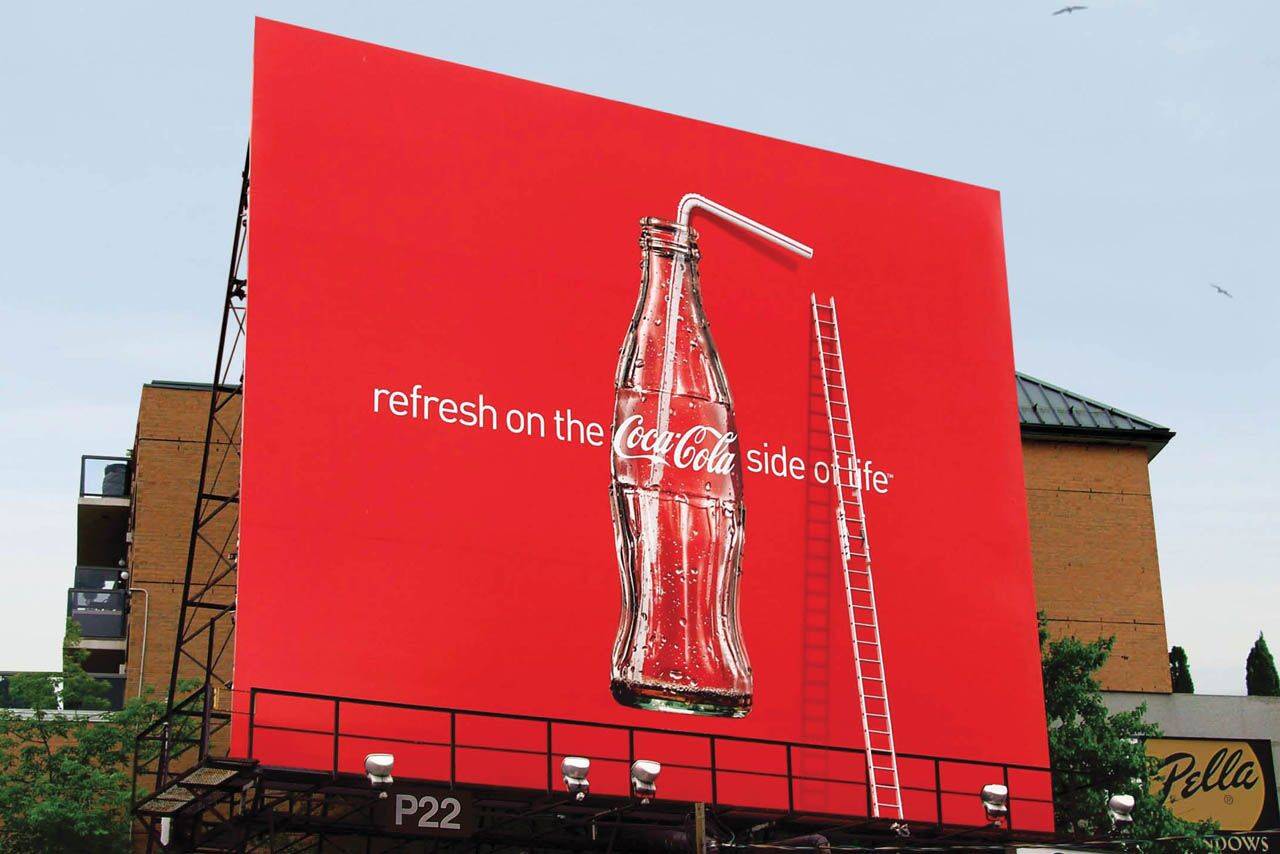
This is where designers make the most common and costly mistake. They carry the brand's preferred typeface — a beautiful custom serif, a delicate script, a condensed display face — directly onto the outdoor canvas without asking whether it survives the distance.
At 500 feet, thin strokes optically break apart. At 100 feet on a highway, a condensed decorative typeface becomes an unreadable smear. Your font choice on a billboard is not a brand decision — it is a legibility decision.
The Typography Rules for OOH
- Use bold weight, not regular. When in doubt, go heavier. You can never have type that is too bold on a hoarding. You absolutely can have type that is too thin.
- Upper and lower case outperforms all caps. Mixed-case text is processed faster because the eye reads the word's shape, not individual letters. Reserve all-caps for emphasis on a single word at most.
- Size for distance, not for screen. As a rough guide, every 1 inch of letter height is legible from approximately 10 feet. Work backwards from your intended viewing distance.
- Give letters room to breathe. Tight tracking at distance turns letters into an undifferentiated block. Letter-spacing matters more on large-format than anywhere else.
The Fonts That Consistently Perform on Hoardings
"Your font choice on a billboard isn't a brand decision. It's a visibility decision. A beautiful typeface that nobody can read at 80 kmph is a billboard that doesn't exist."
Rule 4 — The Visual Is the Message
The most powerful outdoor ads are the ones where the visual and the message are the same thing — where you don't need the headline because the image has already told the whole story. This is the hardest brief to crack and the most rewarding when you do.
The human brain processes visuals 60,000 times faster than text. On a billboard, the image does not illustrate the message. The image is the message.
How to Build a Dominant Visual
- Make objects bigger than feels comfortable. It is far more interesting to make a small object large than a large object small. A single strawberry at full-hoarding scale is more arresting than a beautifully composed product shot showing the whole range. The image should always command the full height of the board.
- Negative space is a design tool. The outdoor environment is busy enough. Breathing room in your design doesn't weaken the key element — it forces the eye toward it more powerfully.
- Logo placement is non-negotiable. The logo typically occupies the bottom-right corner, where the eye naturally lands last after reading the primary message. Large enough to register at distance — not an afterthought.
- Shoot specifically for outdoor. Stock photography was not designed for a 40×20 ft hoarding. OOH photography is high-contrast, hero-lit, with clean separation between subject and background. If you're using a stock image on a billboard, it will look like a stock image on a billboard.
The 5-Second Test — The Only Review That Matters
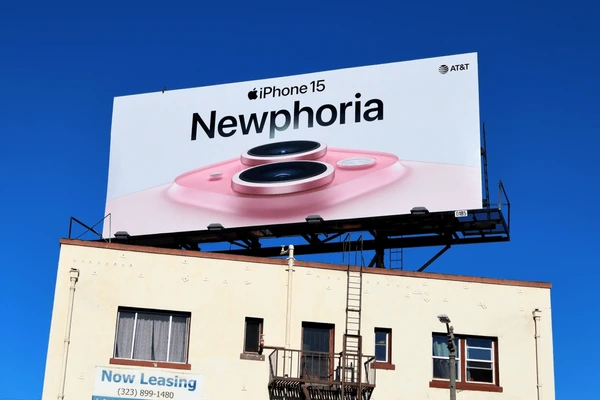
After designing your ad, before approving it, before booking the site — run this test. Show your creative to someone who hasn't seen it. Give them five seconds. Cover it. Ask three questions.
Show it. Cover it. Ask:
If they answer two of the three correctly, you have a working ad. If they can't name the brand — your logo is too small. If the message is unclear — you have too many words. If there is no action — sharpen your call to action.
Research consistently shows that an OOH ad gets an average of just two seconds of active attention in real-world conditions — even less for moving traffic. The five-second test is generous. If your ad can't pass it, it is not ready.
Great Creative Needs
the Right Location Behind It
At Selvel, we work with brands at the creative stage — not just the booking stage. We'll tell you if your layout won't survive at highway speeds. We'll flag if your palette disappears against the afternoon sky. And we'll help you find the sites where your creative will land hardest.
Talk to SelvelFrequently Asked Questions
The Brief Behind the Brief
The best billboard isn't the most beautiful one. It's the one that gets read, remembered, and acted on — by someone who had no intention of paying attention.
Strip it down. Earn attention in seconds. Put legibility before everything. Let the visual do the heavy lifting. Lead with emotion, follow with information. And always let the location shape the message.
S. E. L. V. E. L. That's the framework. That's the brief. And after 80 years on India's outdoor canvas — it's also the only one that has ever truly worked.